Australians love to talk about real estate. This is the basic premise:
“Property always goes up.”
Not only is this overly simplistic, but it’s also false.
Sure, if you’re a Baby Boomer with a fifty-year time horizon, property has been an unbelievable investment.
You’ve ridden a tidal wave of price growth that is likely helping to pay your grandkids private school fees today.
But if you’re a millennial, those rose-coloured glasses have been replaced by corrective lenses that bring a market myth back into focus:
Capital growth is not your God-given right.
Sounds depressing.
But that doesn’t mean Millennials shouldn’t buy property. I’ll explain why shortly.
A 30-year-old today has witnessed Melbourne property prices go backwards in real terms since they entered the workforce.
For many Melbournians over the past decade, their home has not been a particularly strong investment at all.
And this includes the blue-chip suburbs of Stonnington, where prices have been pretty much stagnant since 2016.
There were some strong years in 2017 and 2020-2021 where prices jumped 10 – 20%. But there were also some soft years in 2018-2019 and 2022-2024 where prices eased around 10%, leaving us roughly back to where we were in 2016/2017.
Last year really brought this into focus for me. I worked with dozens of vendors who bought and sold within a ten-year window.
Not one of them walked away with what most people would consider a meaningful capital gain once costs were accounted for. Stamp duty. Agent fees. Maintenance. Holding costs.
Yet most of them were happy.
Why? Because most people don’t buy a principal place of residence as an investment. And most people don’t sell their home just to cash in.
People move due to “life Tetris”. Kids are born. Careers change. Relationships evolve. Circumstances intervene.
A home is part of the journey, not just a financial instrument.
But back to the numbers – let me give a telling example.
A brick period home in one of Prahran’s top five streets. North facing with off street parking on its own parcel of unencumbered land and in great condition.
Purchased in October 2016 for $1,750,000.
Sold at auction on Saturday (February 2026) with three bidders for $1,680,000.
On the surface, that’s a modest nominal loss.
But inflation matters. In today’s dollars, that 2016 purchase price is closer to $2.28m. Which means the property went backwards in real terms before costs are even considered.
Then add the cost of ownership.
Interest alone on an 80% loan over the period would be approximately $550,000. (Assuming 30-year P & I mortgage at an average rate of 4.5%).
Rates, insurance, maintenance, stamp duty and selling costs push total ownership costs to around $820,000 (roughly $1,700 per week over the holding period).
This wasn’t a poor-quality asset. It wasn’t a fringe location. It wasn’t badly timed. It’s simply a reminder that even an A-grade property doesn’t guarantee a good investment outcome.
The deposit is also worth mentioning.
The $350,000 deposit required in 2016, if invested in a broad ASX index ETF with dividends reinvested, would likely be worth somewhere around $800,000 today (using a conservative assumption of ~9% annual return including dividend reinvestment).
But that comparison needs context. There is a huge caveat.
Most people don’t rent a home like this and invest the deposit instead.
They rent, and they spend. Rent of around $1,000 per week would have totalled close to $500,000 over the same period.
“Rent money is dead money”, as Baby Boomers like to say.
There’s also the reality of forced savings. Through regular mortgage repayments, the owners still reduced their loan balance by close to $300,000. That equity was built automatically.
So no, this isn’t an argument that the owners should have rented instead.
I’m not anti home ownership either… That would be weird, being a real estate agent! I own my own home.
And while I have considered renting a bigger home instead of upgrading and investing the difference – like all the finance podcast bros tell you – that just doesn’t line up with my values.
Frankly, I would be concerned there could be another big property boom and I’d miss the ride.
Furthermore, I’m an independent person who values autonomy. The idea that someone else (a landlord) could pull the pin on our home and force my family to move at short notice would genuinely weigh on my mental wellbeing..
That’s not a judgement on renting… I rented for 15 years.
And when my four-year-old takes a chunk out of the plaster with the wheel nut of his balance bike (despite 14 clear warnings), I don’t want to feel guilty about it, or need permission to do a terrible patch-up job.
I want to be able to ruin my own house with what my wife calls PDDIY (please don’t do it yourself!)
Homes provide benefits spreadsheets can’t measure. Security. Stability. Control. Pride.
For decades, consistent house price growth created a huge amount of wealth for the generations that came before us.
Interest rates fell from around eighteen percent in the early nineties to below two percent at their lowest point.
Dual incomes dramatically increased borrowing capacity. Society became more comfortable with debt. Lending policies loosened. All of that created enormous upward pressure on prices.
But can that repeat itself indefinitely?
Can we really expect house prices to double every seven to ten years forever?
Are buyers going to feel comfortable paying twenty times household income for a home as a long-term norm? At some point affordability must matter.
None of this is to say property is a poor decision.
Over the long term, quality real estate has proven remarkably resilient. But the idea that every decade must deliver strong real growth is simply not grounded in reality.
Markets move in cycles. Asset selection matters. Timing matters. And sometimes the greatest return from a home is the life lived within it, not the number on a contract of sale.
Maybe the healthier mindset is this…
Your home is first a place to live. Sometimes it also turns out to be a strong investment. But the two are not the same thing.
And acknowledging that probably takes a bit of pressure off.
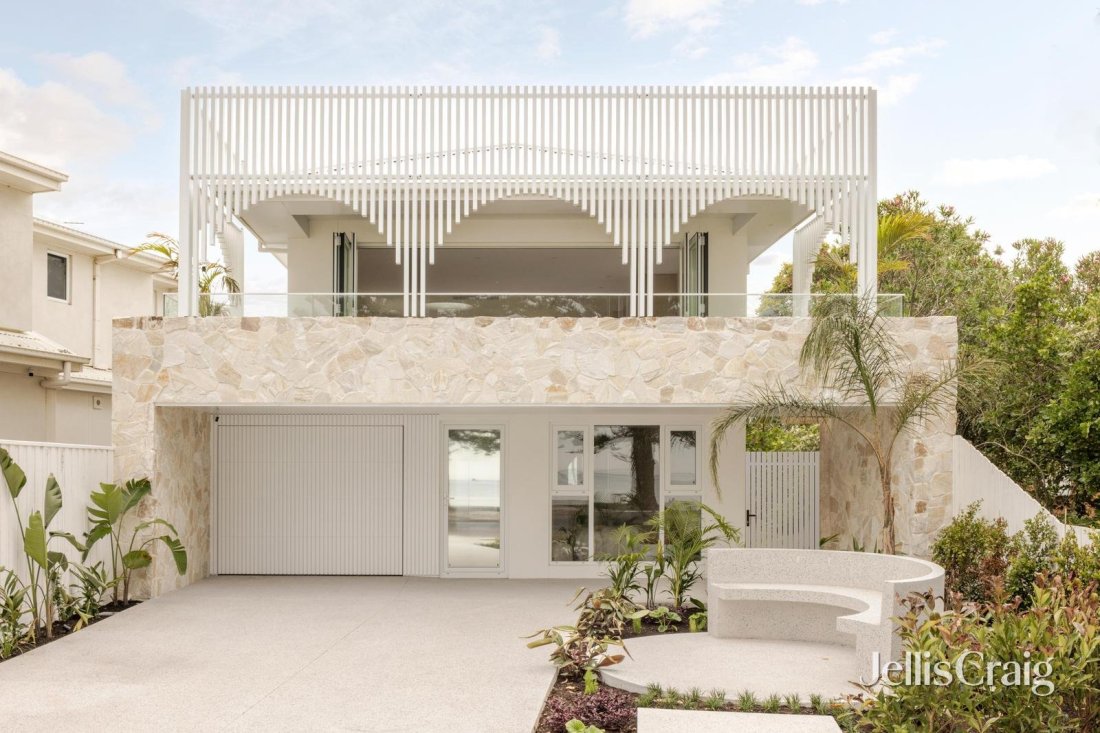
Feature Image: 267 Esplanade, Altona


